1,704 Results for : tutorial
-

Samsung GU43AU9089UXZG weiß 108 cm (43 Zoll) Fernseher (4K / Ultra HD)
Großes Entertainment bei dir zuhause: Samsung GU43AU9089UXZG Erlebe ein Bild mit einer enormen Farbvielfalt -Dynamic Crystal ColorStürze dich in ein Meer voller Farben: Durch Dynamic Crystal Color kannst du realitätsnahe Farbspektren sehen und eine Vielzahl an Details genießen.Genieße mit leistungsstarkem 4K eine Vielfalt an Farbnuancen - Crystal Processor 4KSpüre Farbnuancen fast wie sie wirklich sind. Dank leistungsstarkem 4K Upscaling kannst du viele deiner Lieblingsinhalte in 4K Qualität genießen.Entdecke spannende Details in verschiedenen Szenen - HDRHDR ermöglicht einen hohen Kontrastumfang des Fernsehers. So genießt man ein Bild, das mit einem enormen Farbspektrum und einer riesigen Detailfülle glänzt - in hellen wie in dunklen Szenen.Bring dein Gaming-Erlebnis auf das nächste Level - Next Level GamingBring die Bewegungsdarstellung in deinen Lieblingsgames auf ein hohes Level. Mit der dynamischen Bildwiederholraten-Technologie Motion Xcelerator Turbo von Samsung verfügst du über eine situationsspezifische Bewegungsanpassung auf 60 Hz-Basis, die VRR und 120 Hz Gaming Content unterstützen kann.Großer Screen für großes Gaming - Super Ultrawide GameView & Game BarGrößere und breitere Bildschirme mit einem Seitenverhältnis von 21 : 9 bzw. 32 : 9 erweitern dein Blickfeld und schaffen optimale Voraussetzungen für erfolgreiches Gaming. Dein Gaming-Erlebnis profitiert zusätzlich von der Game Bar und ihren umfangreichen Einstellungsmöglichkeiten wie der Anpassung des Bildschirmseitenverhältnisses, der Anzeige des Input Lag, FPS, HDR, der Steuerung des kabellosen Headsets und vielem mehr.Folgt deinen Kommandos nahezu ohne Verzögerung - Verzögerungsfreie SpielkontrolleKomm schnell ins Spiel mit dem Auto Low Latency Mode (AALM), der deinen Bildschirm automatisch anpassen kann und dir ein Spielerlebnis mit verschwindend geringem Input Lag ermöglicht. Erlebe flüssiges Gaming in einer beeindruckenden Form weitgehend ohne Bewegungsunschärfen und Ruckeln.Virtueller Sound, der verschiedenen Bewegungen folgen kann - Objektverfolgender Sound LiteVirtueller 3D Surround Sound lässt dich den Sound nicht nur von vorne, sondern auch von oben hören.Mehrere Inhalte gleichzeitig sehen - Smartphone-Inhalte übertragenMit Multi View wird dein TV-Bild in zwei Hälften geteilt, sodass du auf einer Seite deine Serien oder Filme schauen kannst, während auf der anderen Seite das Display deines kompatiblen Smartphones zu sehen ist. So kannst du deinen TV im Blick behalten, während du dir die aktuellen Sportergebnisse oder ein Gaming-Tutorial anschaust.Nutze den Sprachassistenten deiner Wahl - Komfortable SprachsteuerungNutze den Sprachassistenten deiner Wahl - Bixby oder Amazon Alexa. Jetzt sind diese Assistenten in den Samsung TV integriert, um unterhaltsames Entertainment mit moderner Bedienung zu ermöglichen.Features: Entdecke spannende Details in verschiedenen Szenen dank HDRGenieße dank Crystal Prozessor 4K eine Vielfalt an FarbnuancenErlebe dank OTS Lite Sound, der Bewegungen folgen kannGroßes Gamingerlebnis dank Super ultraweiter Spielansicht & Game BarFaszinierendes, ultraschlankes Design für dein UHD TVAlexa-UnterstützungIntegriert und KompatibelTV Plus: JaSmartThings App-Unterstützung: JaDLNA WiFi DirectSound MirroringTime-Shift (zeitversetztes Fernsehen)Auto Game Mode (ALLM)Game Motion Plus Hinweis: Dieser Artikel kann nur an eine deutsche Lieferadresse ausgeliefert werden.- Shop: buecher
- Price: 549.00 EUR excl. shipping
-

Freelance Video Game Writing (eBook, PDF)
In the competitive world of video game writing and narrative design, developers are losing permanent positions while freelancing careers are on the rise. Many developers don't understand how to seize these freelancing opportunities, such as understanding the business of freelancing, how to go about finding work, how to establish strong relationships with clients, and how to sustain themselves as freelancers. Freelance Video Game Writing: The Life & Business of the Digital Mercenary for Hire offers developers guidance on achieving their freelancing goals as telecommuters. Dr. Toiya Kristen Finley presents practical insight into the profession and how to further enhance your freelancing business, whether you are a newcomer in the field or an experienced freelancer. Key Features: Two sections covering the life of the freelancer and the freelance business Fifteen interviews from narrative designers, game writers, and other developers on topics from maintaining a healthy work-life balance to figuring out your rates to working a full-time job and freelancing on the side A comprehensive list of definitions with which freelancers need to be familiar Exercises to help augment your understanding of freelancing and improve your business Biography Nashville native Toiya Kristen Finley, PhD, has been a freelance writer and editor her entire adult life. She earned a doctorate in literature and creative writing from Binghamton University. Over her career, she has published more than 80 works of fiction, nonfiction, comics/manga, and games, and has over 20 years of experience writing in a range of genres, tones, styles, and voices. She gained editorial experience interning at Henry Holt's imprint, Owl Books. At Binghamton, she founded the literary journal Harpur Palate and served as its managing/fiction editor. In 2011, she cofounded the Game Writing Tutorial at GDC Online with Tobias Heussner and served as an instructor in 2011 and 2012. In videogames, she has worked as a game designer, narrative designer, game writer, editor, and diversity/narrative consultant (or some combination of the five) on everything from AAA titles to mobile games to games for children to small indie projects. Recent work includes writing the visual novel Siren Song (Stardust Works), copyediting for Destiny 2 (Bungie), and developmental editing on Insecure: The Come Up Game (Glow Up Games). A presenter at conferences throughout the year, she has lectured on freelancing and storytelling and led workshops on narrative design and game design. She is a member of the IGDA Game Writing Special Interest Group's Executive Board. The Game Narrative Toolbox (CRC Press), a book on narrative design she coauthored with Jennifer Brandes Hepler, Ann Lemay, and Tobias Heussner, was published in 2015. Narrative Tactics for Mobile and Social Games: Pocket-Sized Storytelling (CRC Press), which she edited and contributed to, was published in 2019. Of late, she has been working on her own visual novel series, beginning with Incarno: Everything Is Written.- Shop: buecher
- Price: 31.95 EUR excl. shipping
-

Freelance Video Game Writing (eBook, ePUB)
In the competitive world of video game writing and narrative design, developers are losing permanent positions while freelancing careers are on the rise. Many developers don't understand how to seize these freelancing opportunities, such as understanding the business of freelancing, how to go about finding work, how to establish strong relationships with clients, and how to sustain themselves as freelancers. Freelance Video Game Writing: The Life & Business of the Digital Mercenary for Hire offers developers guidance on achieving their freelancing goals as telecommuters. Dr. Toiya Kristen Finley presents practical insight into the profession and how to further enhance your freelancing business, whether you are a newcomer in the field or an experienced freelancer. Key Features: Two sections covering the life of the freelancer and the freelance business Fifteen interviews from narrative designers, game writers, and other developers on topics from maintaining a healthy work-life balance to figuring out your rates to working a full-time job and freelancing on the side A comprehensive list of definitions with which freelancers need to be familiar Exercises to help augment your understanding of freelancing and improve your business Biography Nashville native Toiya Kristen Finley, PhD, has been a freelance writer and editor her entire adult life. She earned a doctorate in literature and creative writing from Binghamton University. Over her career, she has published more than 80 works of fiction, nonfiction, comics/manga, and games, and has over 20 years of experience writing in a range of genres, tones, styles, and voices. She gained editorial experience interning at Henry Holt's imprint, Owl Books. At Binghamton, she founded the literary journal Harpur Palate and served as its managing/fiction editor. In 2011, she cofounded the Game Writing Tutorial at GDC Online with Tobias Heussner and served as an instructor in 2011 and 2012. In videogames, she has worked as a game designer, narrative designer, game writer, editor, and diversity/narrative consultant (or some combination of the five) on everything from AAA titles to mobile games to games for children to small indie projects. Recent work includes writing the visual novel Siren Song (Stardust Works), copyediting for Destiny 2 (Bungie), and developmental editing on Insecure: The Come Up Game (Glow Up Games). A presenter at conferences throughout the year, she has lectured on freelancing and storytelling and led workshops on narrative design and game design. She is a member of the IGDA Game Writing Special Interest Group's Executive Board. The Game Narrative Toolbox (CRC Press), a book on narrative design she coauthored with Jennifer Brandes Hepler, Ann Lemay, and Tobias Heussner, was published in 2015. Narrative Tactics for Mobile and Social Games: Pocket-Sized Storytelling (CRC Press), which she edited and contributed to, was published in 2019. Of late, she has been working on her own visual novel series, beginning with Incarno: Everything Is Written.- Shop: buecher
- Price: 31.95 EUR excl. shipping
-

Seven Languages in Seven Weeks
You should learn a programming language every year, as recommended by The Pragmatic Programmer. But if one per year is good, how about Seven Languages in Seven Weeks? In this book you'll get a hands-on tour of Clojure, Haskell, Io, Prolog, Scala, Erlang, and Ruby. Whether or not your favorite language is on that list, you'll broaden your perspective of programming by examining these languages side-by-side. You'll learn something new from each, and best of all, you'll learn how to learn a language quickly. You should learn a programming language every year, as recommended by The Pragmatic Programmer. But if one per year is good, how about Seven Languages in Seven Weeks? In this book you'll get a hands-on tour of Clojure, Haskell, Io, Prolog, Scala, Erlang, and Ruby. Whether or not your favorite language is on that list, you'll broaden your perspective of programming by examining these languages side-by-side. You'll learn something new from each, and best of all, you'll learn how to learn a language quickly. Ruby, Io, Prolog, Scala, Erlang, Clojure, Haskell. With Seven Languages in Seven Weeks, by Bruce A. Tate, you'll go beyond the syntax-and beyond the 20-minute tutorial you'll find someplace online. This book has an audacious goal: to present a meaningful exploration of seven languages within a single book. Rather than serve as a complete reference or installation guide, Seven Languages hits what's essential and unique about each language. Moreover, this approach will help teach you how to grok new languages. For each language, you'll solve a nontrivial problem, using techniques that show off the language's most important features. As the book proceeds, you'll discover the strengths and weaknesses of the languages, while dissecting the process of learning languages quickly--for example, finding the typing and programming models, decision structures, and how you interact with them. Among this group of seven, you'll explore the most critical programming models of our time. Learn the dynamic typing that makes Ruby, Python, and Perl so flexible and compelling. Understand the underlying prototype system that's at the heart of JavaScript. See how pattern matching in Prolog shaped the development of Scala and Erlang. Discover how pure functional programming in Haskell is different from the Lisp family of languages, including Clojure. Explore the concurrency techniques that are quickly becoming the backbone of a new generation of Internet applications. Find out how to use Erlang's let-it-crash philosophy for building fault-tolerant systems. Understand the actor model that drives concurrency design in Io and Scala. Learn how Clojure uses versioning to solve some of the most difficult concurrency problems. It's all here, all in one place. Use the concepts from one language to find creative solutions in another-or discover a language that may become one of your favorites.- Shop: buecher
- Price: 24.99 EUR excl. shipping
-

Getting Structured Data from the Internet
Utilize web scraping at scale to quickly get unlimited amounts of free data available on the web into a structured format. This book teaches you to use Python scripts to crawl through websites at scale and scrape data from HTML and JavaScript-enabled pages and convert it into structured data formats such as CSV, Excel, JSON, or load it into a SQL database of your choice. This book goes beyond the basics of web scraping and covers advanced topics such as natural language processing (NLP) and text analytics to extract names of people, places, email addresses, contact details, etc., from a page at production scale using distributed big data techniques on an Amazon Web Services (AWS)-based cloud infrastructure. It book covers developing a robust data processing and ingestion pipeline on the Common Crawl corpus, containing petabytes of data publicly available and a web crawl data set available on AWS's registry of open data.Getting Structured Data from the Internet also includes a step-by-step tutorial on deploying your own crawlers using a production web scraping framework (such as Scrapy) and dealing with real-world issues (such as breaking Captcha, proxy IP rotation, and more). Code used in the book is provided to help you understand the concepts in practice and write your own web crawler to power your business ideas.What You Will LearnUnderstand web scraping, its applications/uses, and how to avoid web scraping by hitting publicly available rest API endpoints to directly get dataDevelop a web scraper and crawler from scratch using lxml and BeautifulSoup library, and learn about scraping from JavaScript-enabled pages using SeleniumUse AWS-based cloud computing with EC2, S3, Athena, SQS, and SNS to analyze, extract, and store useful insights from crawled pagesUse SQL language on PostgreSQL running on Amazon Relational Database Service (RDS) and SQLite using SQLalchemyReview sci-kit learn, Gensim, and spaCy to perform NLP tasks on scraped web pages such as name entity recognition, topic clustering (Kmeans, Agglomerative Clustering), topic modeling (LDA, NMF, LSI), topic classification (naive Bayes, Gradient Boosting Classifier) and text similarity (cosine distance-based nearest neighbors)Handle web archival file formats and explore Common Crawl open data on AWSIllustrate practical applications for web crawl data by building a similar website tool and a technology profiler similar to builtwith.comWrite scripts to create a backlinks database on a web scale similar to Ahrefs.com, Moz.com, Majestic.com, etc., for search engine optimization (SEO), competitor research, and determining website domain authority and rankingUse web crawl data to build a news sentiment analysis system or alternative financial analysis covering stock market trading signalsWrite a production-ready crawler in Python using Scrapy framework and deal with practical workarounds for Captchas, IP rotation, and moreWho This Book Is ForPrimary audience: data analysts and scientists with little to no exposure to real-world data processing challenges, secondary: experienced software developers doing web-heavy data processing who need a primer, tertiary: business owners and startup founders who need to know more about implementation to better direct their technical team- Shop: buecher
- Price: 35.99 EUR excl. shipping
-

Learn Powershell in a Month of Lunches: Covers Windows, Linux, and Macos
Designed for busy IT professionals, this innovative guide will take you from the basics to PowerShell proficiency through 25 tutorials you can do in your lunch break. In Learn PowerShell in a Month of Lunches, Fourth Edition you will learn: Discoverability with the Help system Background jobs and automation techniques Simple scripting to automate repetitive tasks Managing cloud services from major cloud providers Extending PowerShell with commands Common syntax and commands cheat sheet Learn PowerShell in a Month of Lunches, Fourth Edition is a task-focused guide for administering your systems using PowerShell. It covers core language features and admin tasks, with each chapter a mini-tutorial you can easily complete in under an hour. Discover how PowerShell works on different operating systems, and start automating tasks so they take just a few seconds to complete. No previous scripting experience required. The book is based on the bestselling Learn Windows PowerShell in a Month of Lunches by community legends Don Jones and Jeffery Hicks. PowerShell team members Travis Plunk and Tyler Leonhardt and Microsoft MVP James Petty have updated this edition to the latest version of PowerShell, including its multi-platform expansion into Linux and macOS. Purchase of the print book includes a free eBook in PDF, Kindle, and ePub formats from Manning Publications. About the technology PowerShell gives you complete command line control over admin tasks like adding users, exporting data, and file management. Whether you're writing one-liners or building complex scripts to manage cloud resources and CI/CD pipelines, PowerShell can handle the task. And now that PowerShell is truly cross-platform, you don't have to switch scripting languages when you move between Windows, Linux, and macOS. About the book Learn PowerShell in a Month of Lunches, Fourth Edition is a new edition of the bestseller that introduced PowerShell to over 100,000 readers. With bite-sized lessons and hands-on exercises, this amazing book guides you from your first command to writing and debugging reusable scripts for Windows, Linux, and macOS. Set aside just an hour a day and you'll soon be tackling increasingly complex automation tasks with PowerShell. What's inside Discoverability with the Help system PowerShell on macOS and Linux Background jobs and automation techniques Managing cloud services from major cloud providers Common syntax and commands cheat sheet About the reader No previous experience with PowerShell or Bash required. About the author James Petty is CEO of PowerShell.org and The DevOps Collective, and a Microsoft MVP. Travis Plunk is an engineer on the PowerShell team. Tyler Leonhardt is an engineer on Visual Studio Code. Don Jones and Jeffery Hicks are the original authors of Learn Windows PowerShell in a Month of Lunches. Table of Contents 1 Before you begin 2 Meet PowerShell 3 Using the help system 4 Running commands 5 Working with providers 6 The pipeline: Connecting commands 7 Adding commands 8 Objects: Data by another name 9 A practical interlude 10 The pipeline, deeper 11 Formatting: And why it's done on the right 12 Filtering and comparisons 13 Remote control: One-to-one and one-to-many 14 Multitasking with background jobs 15 Working with many objects, one at a time 16 Variables: A place to store your stuff 17 Input and output 18 Sessions: Remote control with less work 19 You call this scripting? 20 Improving your parameterized script 21 Using regular expressions to parse text files 22 Using someone else's script 23 Adding logic and loops 24 Handling errors 25 Debugging techniques 26 Tips, tricks, and techniques 27 Never the end- Shop: buecher
- Price: 40.99 EUR excl. shipping
-

Learn PowerShell in a Month of Lunches, Fourth Edition (eBook, ePUB)
Designed for busy IT professionals, this innovative guide will take you from the basics to PowerShell proficiency through 25 tutorials you can do in your lunch break. In Learn PowerShell in a Month of Lunches, Fourth Edition you will learn: Discoverability with the Help system Background jobs and automation techniques Simple scripting to automate repetitive tasks Managing cloud services from major cloud providers Extending PowerShell with commands Common syntax and commands cheat sheet Learn PowerShell in a Month of Lunches, Fourth Edition is a task-focused guide for administering your systems using PowerShell. It covers core language features and admin tasks, with each chapter a mini-tutorial you can easily complete in under an hour. Discover how PowerShell works on different operating systems, and start automating tasks so they take just a few seconds to complete. No previous scripting experience required. The book is based on the bestselling Learn Windows PowerShell in a Month of Lunches by community legends Don Jones and Jeffery Hicks. PowerShell team members Travis Plunk and Tyler Leonhardt and Microsoft MVP James Petty have updated this edition to the latest version of PowerShell, including its multi-platform expansion into Linux and macOS. About the technology PowerShell gives you complete command line control over admin tasks like adding users, exporting data, and file management. Whether you're writing one-liners or building complex scripts to manage cloud resources and CI/CD pipelines, PowerShell can handle the task. And now that PowerShell is truly cross-platform, you don't have to switch scripting languages when you move between Windows, Linux, and macOS. About the book Learn PowerShell in a Month of Lunches, Fourth Edition is a new edition of the bestseller that introduced PowerShell to over 100,000 readers. With bite-sized lessons and hands-on exercises, this amazing book guides you from your first command to writing and debugging reusable scripts for Windows, Linux, and macOS. Set aside just an hour a day and you'll soon be tackling increasingly complex automation tasks with PowerShell. What's inside Discoverability with the Help system PowerShell on macOS and Linux Background jobs and automation techniques Managing cloud services from major cloud providers Common syntax and commands cheat sheet About the reader No previous experience with PowerShell or Bash required. About the author James Petty is CEO of PowerShell.org and The DevOps Collective, and a Microsoft MVP. Travis Plunk is an engineer on the PowerShell team. Tyler Leonhardt is an engineer on Visual Studio Code. Don Jones and Jeffery Hicks are the original authors of Learn Windows PowerShell in a Month of Lunches. Table of Contents 1 Before you begin 2 Meet PowerShell 3 Using the help system 4 Running commands 5 Working with providers 6 The pipeline: Connecting commands 7 Adding commands 8 Objects: Data by another name 9 A practical interlude 10 The pipeline, deeper 11 Formatting: And why it's done on the right 12 Filtering and comparisons 13 Remote control: One-to-one and one-to-many 14 Multitasking with background jobs 15 Working with many objects, one at a time 16 Variables: A place to store your stuff 17 Input and output 18 Sessions: Remote control with less work 19 You call this scripting? 20 Improving your parameterized script 21 Using regular expressions to parse text files 22 Using someone else's script 23 Adding logic and loops 24 Handling errors 25 Debugging techniques 26 Tips, tricks, and techniques 27 Never the end- Shop: buecher
- Price: 27.94 EUR excl. shipping
-

C++ Primer
While maintaining the authori Product Description Bestselling Programming Tutorial and Reference Completely Rewritten for the New C++11 Standard Fully updated and recast for the newly released C++11 standard, this authoritative and comprehensive introduction to C++ will help you to learn the language fast, and to use it in modern, highly effective ways. Highlighting today’s best practices, the authors show how to use both the core language and its standard library to write efficient, readable, and powerful code. C++ Primer, Fifth Edition, introduces the C++ standard library from the outset, drawing on its common functions and facilities to help you write useful programs without first having to master every language detail. The book’s many examples have been revised to use the new language features and demonstrate how to make the best use of them. This book is a proven tutorial for those new to C++, an authoritative discussion of core C++ concepts and techniques, and a valuable resource for experienced programmers, especially those eager to see C++11 enhancements illuminated. Start Fast and Achieve More Learn how to use the new C++11 language features and the standard library to build robust programs quickly, and get comfortable with high-level programming Learn through examples that illuminate today’s best coding styles and program design techniques Understand the “rationale behind the rules”: why C++11 works as it does Use the extensive crossreferences to help you connect related concepts and insights Benefit from up-to-date learning aids and exercises that emphasize key points, help you to avoid pitfalls, promote good practices, and reinforce what you’ve learned Access the source code for the extended examples from informit.com/title/0321714113 C++ Primer, Fifth Edition, features an enhanced, layflat binding, which allows the book to stay open more easily when placed on a flat surface. This special binding method—notable by a small space inside the spine—also increases durability. Features + Benefits A best-seller completely revised and rewritten for the new C++ 2011 standard A favorite choice for a first C++ book--greatly improved and updated for modern C++ programming. Reorganized to better address the novice audience, making it more approachable for non-C programmers. Features many new examples that are less advanced and more accessible to novices as well as experienced programmers--folks who already use C++ need this book too. Preface xxiii Chapter 1: Getting Started 1 1.1 Writing a Simple C++ Program 2 1.2 A First Look at Input/Output 5 1.3 A Word About Comments 9 1.4 Flow of Control 11 1.5 Introducing Classes 19 1.6 The Bookstore Program 24 Chapter Summary 26 Defined Terms 26 Part I: The Basics 29 Chapter 2: Variables and Basic Types 31 2.1 Primitive Built-in Types 32 2.2 Variables 41 2.3 Compound Types 50 2.4 const Qualifier 59 2.5 Dealing with Types 67 2.6 Defining Our Own Data Structures 72 Chapter Summary 78 Defined Terms 78 Chapter 3: Strings, Vectors, and Arrays 81 3.1 Namespace using Declarations 82 3.2 Library string Type 84 3.3 Library vector Type 96 3.4 Introducing Iterators 106 3.5 Arrays 113 3.6 Multidimensional Arrays 125 Chapter Summary 131 Defined Terms 131 Chapter 4: Expressions 133 4.1 Fundamentals 134 4.2 Arithmetic Operators 139 4.3 Logical and Relational Operators 141 4.4 Assignment Operators 144 4.5 Increment and Decrement Operators 147 4.6 The Member Access Operators 150 4.7 The Conditional Operator 151 4.8 The Bitwise Operators 152 4.9 The sizeof Operator 156 4.10 Comma Operator 157 4.11 Type Conversions 159 4.12 Operator Precedence Table 166 Chapter Summary 168 Defined Terms 168 Chapter 5: Statements 171 5.1 Simple Statements 172 5.2 Statement Scope 174 5.3 Conditional Statements 174 5.4 Iterative Statements 183 5.5 Jump Statements 190 5.6 try Blocks and Exception Handling 193 Chapter Summary 199 Defined Terms 199 Chapter 6: Functions 201 6.1 Function Basics 202 6.2 Argument Passing 208 6.3 Return Types and the return Statement 222 6.4 Overloaded Functions 230 6.5 Features for Specialized Uses 236 6.6 Function Matching 242 6.7 Pointers to Functions 247 Chapter Summary 251 Defined Terms 251 Chapter 7: Classes 253 7.1 Defining Abstract Data Types 254 7.2 Access Control and Encapsulation 268 7.3 Additional Class Features 271 7.4 Class Scope 282 7.5 Constructors Revisited 288 7.6 static Class Members 300 Chapter Summary 305 Defined Terms 305 Part II: The C++ Library 307 Chapter 8: The IO Library 309 8.1 The IO Classes 310 8.2 File Input and Output 316 8.3 string Streams 321 Chapter Summary 324 Defined Terms 324 Chapter 9: Sequential Containers 325 9.1 Overview of the Sequential Containers 326 9.2 Container Library Overview 328 9.3 Sequential Container Operations 341 9.4 How a vector Grows 355 9.5 Additional string Operations 360 9.6 Container Adaptors 368 Chapter Summary 372 Defined Terms 372 Chapter 10: Generic Algorithms 375 10.1 Overview 376 10.2 A First Look at the Algorithms 378 10.3 Customizing Operations 385 10.4 Revisiting Iterators 401 10.5 Structure of Generic Algorithms 410 10.6 Container-Specific Algorithms 415 Chapter Summary 417 Defined Terms 417 Chapter 11: Associative Containers 419 11.1 Using an Associative Container 420 11.2 Overview of the Associative Containers 423 11.3 Operations on Associative Containers 428 11.4 The Unordered Containers 443 Chapter Summary 447 Defined Terms 447 Chapter 12: Dynamic Memory 449 12.1 Dynamic Memory and Smart Pointers 450 12.2 Dynamic Arrays 476 12.3 Using the Library: A Text-Query Program 484 Chapter Summary 491 Defined Terms 491 Part III: Tools for Class Authors 493 Chapter 13: Copy Control 495 13.1 Copy, Assign, and Destroy 496 13.2 Copy Control and Resource Management 510 13.3 Swap 516 13.4 A Copy-Control Example 519 13.5 Classes that Manage Dynamic Memory 524 13.6 Moving Objects 531 Chapter Summary 549 Defined Terms 549 Chapter 14: Overloaded Operations and Conversions 551 14.1 Basic Concepts 552 14.2 Input and Output Operators 556 14.3 Arithmetic and Relational Operators 560 14.4 Assignment Operators 563 14.5 Subscript Operator 564 14.6 Increment and Decrement Operators 566 14.7 Member Access Operators 569 14.8 Function-Call Operator 571 14.9 Overloading, Conversions, and Operators 579 Chapter Summary 590 Defined Terms 590 Chapter 15: Object-Oriented Programming 591 15.1 OOP: An Overview 592 15.2 Defining Base and Derived Classes 594 15.3 Virtual Functions 603 15.4 Abstract Base Classes 608 15.5 Access Control and Inheritance 511 15.6 Class Scope under Inheritance 617 15.7 Constructors and Copy Control 622 15.8 Containers and Inheritance 630 15.9 Text Queries Revisited 634 Chapter Summary 649 Defined Terms 649 Chapter 16: Templates and Generic Programming 651 16.1 Defining a Template 652 16.2 Template Argument Deduction 678 16.3 Overloading and Templates 694 16.4 Variadic Templates 699 16.5 Template Specializations 706 Chapter Summary 713 Defined Terms 713 Part IV: Advanced Topics 715 Chapter 17: Specialized Library Facilities 717 17.1 The tuple Type 718 17.2 The bitset Type 723 17.3 Regular Expressions 728 17.4 Random Numbers 745 17.5 The IO Library Revisited 752 Chapter Summary 769 Defined Terms 769 Chapter 18: Tools for Large Programs 771 18.1 Exception Handling 772 18.2 Namespaces 785 18.3 Multiple and Virtual Inheritance 802 Chapter Summary 816 Defined Terms 816 Chapter 19: Specialized Tools and Techniques 819While maintaining the authority and quality of a book that has sold more than 500,000 copies, this Fifth edition is not your father's C++ Primer. It has been completely revised and rewritten to conform to today's C++ usage. and to cover the recently released C++ 2011 standard. Students new to C++ will find a clear and practically organized introduction to the language enhanced by numerous pedagogical aids. Students returning to C++ will be able to update their knowledge with new material on using C++ libraries and programming styles. Access the source code for the extended examples from informit.com/title/0321714113- Shop: buecher
- Price: 36.99 EUR excl. shipping
-

Professional Microsoft PowerPivot for Excel and SharePoint
With PowerPivot, Microsoft brings the power of Microsoft's business intelligence tools to Excel and SharePoint users. Self-service business intelligence today augments traditional BI methods, allowing faster response time and greater flexibility. If you're a business decision-maker who uses Microsoft Office or an IT professional responsible for deploying and managing your organization's business intelligence systems, this guide will help you make the most of PowerPivot. Professional Microsoft PowerPivot for Excel and SharePoint describes all aspects of PowerPivot and shows you how to use each of its major features. By the time you are finished with this book, you will be well on your way to becoming a PowerPivot expert. This book is for people who want to learn about PowerPivot from end to end. You should have some rudimentary knowledge of databases and data analysis. Familiarity with Microsoft Excel and Microsoft SharePoint is helpful, since PowerPivot builds on those two products. This book covers the first version of PowerPivot, which ships with SQL Server 2008 R2 and enhances Microsoft Office 2010. It provides an overview of PowerPivot and a detailed look its two components: PowerPivot for Excel and PowerPivot for SharePoint. It explains the technologies that make up these two components, and gives some insight into why these components were implemented the way they were. Through an extended example, it shows how to build a PowerPivot application from end to end. The companion Web site includes all the sample applications and reports discussed. What This Book Covers After discussing self-service BI and the motivation for creating PowerPivot, the book presents a quick, end-to-end tutorial showing how to create and publish a simple PowerPivot application. It then drilsl into the features of PowerPivot for Excel in detail and, in the process, builds a more complex PowerPivot application based on a real-world case study. Finally, it discusses the server side of PowerPivot (PowerPivot for SharePoint) and provides detailed information about its installation and maintenance. Chapter 1, "Self-Service Business Intelligence and Microsoft PowerPivot," begins Part I of the book. This chapter describes self-service BI and introduces PowerPivot, Microsoft's first self-service BI tool. It provides a high-level look at the two components that make up PowerPivot - PowerPivot for Excel and PowerPivot for SharePoint. Chapter 2, "A First Look at PowerPivot," walks you through a simple example of creating a PowerPivot application from end to end. In the process, it shows how to set up the two components of PowerPivot, and describes the normal workflow of creating a simple PowerPivot application. Chapter 3, "Assembling Data," starts off Part II of the book, and explains how to bring data into PowerPivot from various external data sources. It also introduces the extended example that you will build in this and subsequent chapters. Chapter 4, "Enriching Data," shows how to enhance the data you brought into your application by creating relationships and using PowerPivot's expression language, Data Analysis Expressions (DAX). Chapter 5, "Self-Service Analysis," describes how to use your PowerPivot data with various Excel features, such as PivotTables, PivotCharts, and slicers to do analysis. Chapter 5 also delves further into DAX, showing how to create and use DAX measures. Chapter 6, "Self-Service Reporting," shows how to publish your PowerPivot workbook to the server side of PowerPivot (PowerPivot for SharePoint), and make use of its features to view and update PowerPivot reports. It also shows how to use the data in a PowerPivot workbook as a data source for reports created in other tools such as Report Builder 3.0 and Excel. Chapter 7, "Preparing for SharePoint 2010," is the first chapter in Part III of the book. It describes the components of SharePoint 2010 that are relevant for PowerPivot, and looks at how PowerPivot for SharePoint interacts with those components. Chapter 8, "PowerPivot for SharePoint Setup and Configuration," provides instructions on how to set up and configure a multi-machine SharePoint farm that contains PowerPivot for SharePoint. Chapter 9, "Troubleshooting, Monitoring, and Securing PowerPivot Services," gives tips on how to troubleshoot PowerPivot for SharePoint issues. It also shows how to monitor the health of your PowerPivot for SharePoint environment, and discusses relevant security issues. Chapter 10, "Diving into the PowerPivot Architecture," describes at a deeper level the architecture of PowerPivot, both client and server. It also explains the Windows Identity Foundation and discusses the use of Kerberos in the context of PowerPivot for SharePoint. Chapter 11, "Enterprise Considerations," talks about common PowerPivot for SharePoint enterprise considerations: capacity planning, optimizing the environment, upgrade considerations, and uploading performance. Appendix A provides instructions for setting up the data sources that are used to build the SDR Healthcare extended example in Chapters 3 through 6. Additionally, two "bonus" elements are available online at this book's companion Web site: * Appendix B is a comprehensive DAX reference that describes all the DAX functions and provides code snippets that show how to use them. * A special chapter describes real-world scenarios in which PowerPivot is used to solve common problems.- Shop: buecher
- Price: 46.99 EUR excl. shipping
-
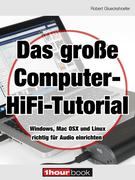
Das große Computer-HiFi-Tutorial
Das große Computer-HiFi-Tutorial - 1hourbook: ab 1.99 €- Shop: ebook.de
- Price: 1.99 EUR excl. shipping