28 Results for : serialism
-
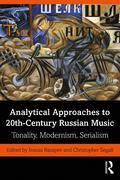
Analytical Approaches to 20th-Century Russian Music
Analytical Approaches to 20th-Century Russian Music - Tonality Modernism Serialism: ab 38.49 €- Shop: ebook.de
- Price: 38.49 EUR excl. shipping
-
AN ANTHOLOGY OF NOISE & ELECTR
Neuauflage der erfolgreichen Vol. 1. mit Stücken von 1921-2001 mit John Cage, Einstürzende Neubauten, Sonic Youth, Philip Jeck, Walter Ruttmann, Nam June Paik u.v.a.Neuauflage der erfolgreichen Vol. 1. mit Stücken von 1921-2001 mit John Cage, Einstürzende Neubauten, Sonic Youth, Philip Jeck, Walter Ruttmann, Nam June Paik u.v.a. THE GATHERING OF ECLECTIC NOISE MAKERS whereas composers like Stockhausen, Berio or Pousseur had come from serialism and began making electronic music as a continuation of their work with traditional instruments, others such as Boehmer or Oliveros composed right away on electronic bases, there were those who invented new methods, like Schaeffer and concrete music, others were outsiders, revolutionaries or visionaries like Xenakis or Cage, without forgetting the branch of sound derived from dada, the complex forms of free jazz, John Coltrane, the acoustic and electronic improvisation scene, rock of the alternative, psychedelic and industrial varieties,the German wave of the 1970s, the last generation of electronic musicians from the beginning or middle of the 1990s, DJs, reinventors of drones, painters or sculptors using sound, and process or software creators. The noise goes on. TRACKS: Luigi and Antonio Russolo (1921) John Cage (1965) Sonic Youth (1983) Einsturzende Neubauten(1998) Walter Ruttman (1930) Pierre Schaeffer (1948) Iannis Xenakis (1958) Paul D. Miller aka dj Spooky That Subliminal Kid (2001) Gordon Mumma (1965) Angus Maclise, Tony Conrad and John Cale (1965) Philip Jeck, Otomo Yoshihide and Martin Tétreault (2000) Survival Research Laboratories (1992) Konrad Boehmer (1966) Nam June Paik (1958-59) Henri Pousseur (1957) Edgard Varèse (1958) Pauline Oliveros (1966) Ryoji Ikeda (1997)- Shop: odax
- Price: 25.67 EUR excl. shipping
-
A Young Person's Guide To The Avant-Garde
A Young Person's guide to the Avant-Garde is an accessible, comprehensive primer that surveys modernism and music in the 20th century, offering Futurist noise, dreamy Surrealism , Dada tone poetry, serialism, prepared pianos, musique concrete and early electronic composition. With a generous playing time of 145, this deluxe double CD set is presented in a handsome 6 panel digipack, containing an illustrated booklet with detailed historical notes.- Shop: odax
- Price: 17.35 EUR excl. shipping
-
Clarinete Solo. Mexico Vol. 1
SOLO CLARINET Mexico Vol. 1 Javier Vinasco Fifty years of music for solo clarinet. Mexico (1957-2007) Composers born in the 20th century To record a CD for solo clarinet with pieces by Mexican composers has been an arduous, difficult, and at the same time rewarding undertaking. On this journey we have investigated a variety of routes and paths that composers had taken and have come to recognize that there is an ample compendium of creators dedicated to writing for the clarinet. These composers have explored languages that range from the acknowledgment of tradition to less conventional experimentations, demonstrating both significant evolution and compositional maturity. Our efforts have resulted in an anthology that shows a glimpse of the variety, quality, and expressivity of the ample spectrum of compositions that, in this case, were selected with an inquisitive spirit from archives, catalogs and private collections. At the same time, this CD presents two new compositions written especially for this project by Alejandro Colavita and Fernando Cataño. Mario Lavista (1943- ) wrote Madrigal (1985), in collaboration with the clarinetist Luis Humberto Ramos, to whom the piece was dedicated. It is a work articulated in two contrasting sections: the first calls to mind the medieval form of the madrigal with the use of a single pedal and two voices, one superior and the other inferior, thus creating an illusion of polyphony within the instrument's monophonic possibilities. The second section, on the other hand, makes use of non-conventional fingerings to achieve different colours of the same note as well as to produce two or more sounds simultaneously. Lavista then re-elaborates this resource, for the piece's conclusion, in an organum, and so, achieves coherence and unity. Elegía (1962) by composer, Manuel de Elías (1939- ), is a piece in a single movement of lyrical nature in which there is a perceived motor impulse from beginning to end. In Imago (1977), the composer liberates the metric and delves deep into the use of technology external to the instrument, in this case the echo chamber, affecting the clarinet's sound. This device provokes in the listener an alternate perception of sounds from the direct source with other moments in which one can detect their reflection. Divertimento (1985) by composer, Gabriela Ortiz (1964- ) and dedicated to Luis Humberto Ramos, is a piece written in a single movement that retains a rhythmic preeminence and that has it's roots in popular music. Although this is one of her earliest compositions, it is possible to recognize -by the construction of phrases and her ample dynamic palette- an efficient combination of technique and intuition. The náhuatl legend of the 'five suns' is the background for the piece titled Macuiltonatiuh (2007), by the composer, Alejandro Colavita (1973- ). This composition was worked closely with the clarinetist, Javier Vinasco, to whom it was dedicated. Macuiltonatiuh is comprised of five continuous movements in a contemporary language that makes use of the extensive gamut of expressive resources in today's clarinet technique. It is possible to discern a search for timbres which, in turn, determine each movement's structure, as well as the overall form of the piece. It is a pursuit that initiates in the depths of the lowest register of the clarinet (shalomuo register) and slides, in continuous ascent, to the instrument's highest limits. Clamoreo (1991) for clarinet and magnetic tape, by the composer Víctor Rasgado (1959- ) is a fragment from his opera Anacleto Morones. Here, the composer carries out a timbrical exploration by combining an acoustic instrument with electronic sounds. It is written in a single movement in which the clarinet presents two motives that persist throughout the entire piece, thus reacting to the changes generated by the tape. Tres Epigramas (1999), for their part, are movements elaborated as independent and self-contained units in which one can appreciate the influences of serialism. The first and third were dedicated to Guido Arbonelli while the second was dedicated to José Luis Nieto Bustamante. Fernando Cataño (1928- ) wrote Llanuras and Ternura in 1957 and 2006, respectively. Both pieces are composed in a single movement in which the inspiration originates from a mystical search undertaken by the composer. Through contemplation, Cataño explores themes related to Mexico's religious syncretism. In these searches, the composer exalts mestizo spirituality within a nationalist frame, and so, demonstrates congruency throughout his pieces with the use of common elements present from his earliest compositions. Up to this point, Llanuras had remained unedited, while Ternura was composed especially for this project. In this recording both pieces make their first public appearance. Cuatro estudios (1975) by composer Jorge Córdoba (1953- ) have a didactic purpose insofar as they develop the musician's technical abilities while exploring different musical elements in each one of them. In the first, articulation works in function of the phrasing, in the second, rhythm is explore by combining measures in simple and compound time, the third fosters perfection of the legato technique, while the fourth contrasts with the previous one, by emphasizing the use of staccato notes. Javier Vinasco is currently one of the most distinguished clarinet players in Latin America. He devotes a significant amount of his work to the interpretation and diffusion of his continent's music, as can be appreciated in his recordings with Música de Cámara Latinoamericana and Cero Records. His warmth and depth of sound, his pure technique and his refined musicality have led diverse composers - among them, Diego Vega, Jesús Lara, Nathan Bounviri and Alejandro Colavita- to write pieces specifically for him. His presentations -including chamber concerts, soloist appearances with orchestral accompaniment, master classes and courses- have been received enthusiastically by critics and public alike in Colombia, Mexico, Argentina, Venezuela, Panama, Italy, the United States, Canada and Japan. Javier holds a Bachelor's degree from Colombia's Universidad del Valle, perfectionism of clarinet studies from the Conservatorio Otorino Respighi in Italy, and his Master's from the UNAM in Mexico City. Throughout his musical career, Javier has studied with Emilio Montoya, Francesco Belli, Roberto Mantilla, and Luis Humberto Ramos.- Shop: odax
- Price: 26.45 EUR excl. shipping
-
Trio Nahual
The program presented on this CD is made up, for the most part, of works seldom played in the world of chamber music for classical guitar, and dedicated to the even rarer formation of the trio. Nevertheless, the aim is to present a repertoire chosen from pieces having in common, beauty and depth of feeling. In order to compose a typical recital program ranging from the Baroque period to the present day, different sources have been used, such as, for example, the transcription technique, ever attentive to the real essence of the work. We have also explored the 'historical' repertoire for three guitars, and, lastly, we have introduced new pieces, which enrich the contemporary repertoire for this formation. Furthermore, we consider that the use of three identical guitars made by the same luthier helps to create the sense of listening to one single instrument, in complete accordance with our philosophy of 'making music together'. Our program begins with the only work not originally intended for guitar trio: an unusual transcription of the G major Concerto for two mandolins, strings and basso continuo (RV 532) by Antonio Vivaldi (Venice, 1678 - Vienna, 1741). Phenomenal violinist and prolific composer of concertos, the Red Priest wrote this piece for the 'figlie di choro', a large instrumental and choral ensemble entirely composed of young girls taken in and educated by the Pio Ospedale della Pietà, a prestigious Venetian orphanage noted for the high quality of the musical education imparted there. Since the Concerto for two mandolins is composed in effect of three real parts, with the violins doubling the solo instruments during the Tutti, the arrangement foresees two guitars for the melodic parts (mandolins and first and second violins), whilst a third instrument is assigned to playing the basso continuo (originally played by a cello and a polyphonic instrument). The concerto bases the structure of it's three movements on the principle of a continual search for a strong contrast of sound and is composed in Vivaldi's most typical creative and stylistic vein, defined by Joachim Quantz as 'a new genre of musical pieces with magnificent ritornellos'. Such a contrast of sound, both harmonic and melodic, is realized magnificently through the continuous dialogue between the two mandolins, moving freely from the brilliant, virtuoso character of the two fast movements to the splendid cantabile of the central Adagio. Leaving behind the Italian Baroque period, we now move towards the elegant classicism that permeates the Trio Concertant pour trois guitares Op. 29 in D Major by the French composer Antoine L'hoyer (Clermont - Ferrand, 1768 - Paris, 1852). Despite the fact that the figure of L'hoyer received little attention during his lifetime, to be then completely forgotten for over a hundred years, the great artistic value of his recently rediscovered compositions assures his right today to be considered one of the most interesting composers for the guitar of the nineteenth century. The piece is divided into four movements following the archetype of the classical sonata. It opens with a substantial Allegro moderato in sonata form, which rebels against the usual patterns of musical writing for the guitar by searching out, during the development, the most daring harmonies that one could wish. The second movement, on the other hand, is a short Menuetto in E minor with a Da Capo finale, and a poco vivace tempo but with a playful contrasting central Trio in the major key. The third movement is an Adagio molto cantabile, characterised by melodies that are simple and flowing but not lacking in great lyricism. A brilliant Andante with variations closes the whole cycle underlining throughout the six variations all the typical possibilities of the guitar writing of the period. Although the Trio Concertant would seem to be less striking when compared to the virtuoso duets for guitar, they share an excellent instrumental effect, underlining all the qualities of the unusual group of instruments to which it is dedicated. It could be said that here, too, L'hoyer's refined writing arises as a veiled tribute to the great piano composers - Haydn and Mozart - to whom he surely owes his inspiration. The exquisite composition that Jean-Michel Damase (Bordeaux, 1928) dedicated in 2004 to the guitar trio, takes us to modern-day France, in spite of being devoted to evoking a nostalgic retro mood. Quatre pour trois, in fact, does nothing to hide the deep admiration that Damase professes for the Parisian music of the Belle Époque period and, of course, for it's distinguished founders, Debussy, Fauré and Ravel. The charm and elegance of his works remain true to the stylistic tradition learnt at the Paris Conservatoire where his composition studies earned him, at only nineteen years of age, the Prix de Composition and subsequently the prestigious Prix de Rome. The four extremely short bagatelles that make up the work, entitled simply I, II, III, IV, remind us of the tiny musical pieces placed within the eccentric French piano suites. The real difficulty of these short pieces, however, proves to be not so much a technical one as a creative quest among different shades and colours in order to highlight the dialogue between the guitars. Functioning as a kind of stylistic watershed, the following piece, takes us towards the Central European cultural scene, which developed right at the very beginning of the Twentieth Century. In spite of it's small size, the Rondo fur Drei Gitaren by the German composer Paul Hindemith (Hanau, 1895-Frankfurt en Main, 1963) can without doubt be considered one of the masterpieces of the chamber music repertoire for the classical guitar. Conceived as a musical intermezzo, the Rondo was composed in 1925 within the new musical language that Hindemith developed from the 1920's onwards, characterized by a complex contrapuntal style already distant from the Expressionism and late German Romanticism that imbued the works of his youth. This new style found extensive space for research in the music for instrumental groups to which Hindemith dedicated a series of works written between 1922 and 1927, called simply Kammermusik. The mechanicalness of the Rondo, with the aggressive rhythm of it's counterpoint and it's anti-Romantic 'assembly-line' tempo correspond to the ideal of music that found broad confirmation in the Italian artistic movement known as Futurism. It was not by chance that Marinetti, the author of the Manifesto that exalted technology, progress and the dynamism of industry, defined Hindemith, perhaps after having listened to Chamber music, 'the leading figure of futurist mechanism'. We end the musical journey undertaken in this CD by returning once more to Italy, where we began. Two pieces are now presented written expressly for the Trio Nahual by the young guitarist, composer and painter Marco De Biasi (Vittorio Veneto, 1977). The first piece, Eires (The title is derived from the word 'serie' read backwards) is a theme with variations in six sections. The theme, conceived in the vein of a freely treated serialism, is characterised by a captivating melodic line spread between the three guitars. The various thematic units are later taken up and developed in different ways so as to create the five variations that, alternating opposing characters and sound settings between them, range from the South American sounding waltz, to the languid central recitative, to the wild counterpoint of the final variation. The careful reader will have understood at this point that Eud Eires, as suggested by the title, is in a certain sense, the continuation of the previous piece, therefore 'serie due' (second series). The complex formulations that are at the basis of this Fantasia for three guitars, can be found in the studies that the composer carried out on the theories expounded by Kandinsky in his book 'The spiritual in Art'. In Eud Eires, created at the same time as the pa- Shop: odax
- Price: 25.83 EUR excl. shipping
-
The Fuzzy Dice Man Cometh
In the summer of '63, at the age of 11, Buck formed his first band, The Centuries . An April Fools 2012 epiphany urged Buck to pick up where he left off 38 years ago. That same year on August 16th, Buck purchased the Quantum Leap East-West Silver Orchestra On-A-Disc. In April 2013 he enrolled in school to continue his edification in composition, arranging and orchestration. The following collection was produced during the period of May 2012 to July 2013. The Breakfast in Bed Ballet (4:45) This piece is an adaptation of a ballad I had written called I Can Live with That. The lyrics open with awaking to the dawn with your loved one beside you. The bouncy melody in the chorus suggested a dance, ergo ballet. I was compelled to add additional cadences and an interlude before the final chorus. The chorus ends on a comically sour note denoting it's time get out of bed and face reality. Soundtrack for your Nightmares (1:34) Based on Thirteen Flutes a-Floating (read about it's conception below). In this version the X-axis denotes the musical pitch while the Y-axis represents time. I like listening to this before I go to bed. String Section One (4:13) This started out as an exercise in modulation and articulation for a string quartet, but it got of control. I did what I could to pull the reins in, but it needed that Contrabass. And it started out as a sweet melody with thoughtful chord changes but rock chord changes are a part of my psyche, so I couldn't resist using them in the "chorus." I consider them, "Neapolitans." Due to the forceful articulation, it is recommended that string players use their worst instrument. Temple Bells (3:04) An upbeat festive theme based on the Mongolian/Chinese pentatonic scale. It has a seasonal taste suitable for the Christmas holidays. The violas get the pluck pizzicato-ed out of them. A Hole-in-One (3:47) Based upon a song I had written using golf as a metaphor for hope and eventual triumph. Picture a fairway with a green flag in the distance, on it the number 1 flapping in the breeze. Experience the excitement, the exhilaration, that rush of adrenaline accompanying the heraldic victory of spotting your ball wedged between the side of the cup and the flag pole. I suck at golf, but I'm not bad at "putt-putt" (miniature golf). Even there, watching your ball bounce off the shallow brick wall bordering the green, ricocheting off a rock positioned in the middle of the path, and down across the lie from hell into the cup is pretty cool. Washboards are used to introduce the basic rhythm sequence at the beginning. Washboards were employed because they suggested a hand scrub cleaning and I understand that golfers scrub their balls before teeing off. Thirteen Flutes a-Floating (1:29) It's your freshman year in Music College and it's 1970 and you're eighteen and you got no gig and it's Saturday night and you're staring at a lava lamp on the dining table in a friend's apartment on the Northwest side of Chicago and there's a steno pad with a marking pen on the table and it's within reach and you decide to draw the globular activity in the lava lamp in phases and look at the lines on the paper and see a music staff and imagine a grid where the horizontal lines (X-axis)denote time moving from top to bottom and the vertical lines (Y-axis) and the space to the right of each line denote the pitch moving from right to left and wherever an image appears a musical note of predetermined pitch and duration is played by one or more of thirteen flutes you chose because you're Major is in Woodwind Performance and your friend has a flute. Please note: This composition was performed a year later at Triton College. There weren't enough flutists so clarinets were substituted. The title is derived from the Twelve Days of Christmas and the sound of water droplets echoing in a cave. I don't what prompted me to add the sound effect. But I like it. March of the Mouth Puppets (3:56) A 12-tone melody was derived from the roll of twelve musician's dice. (Twelve 12-sided die, each side notated with a note from our chromatic scale.) Artistic liberty intervened and two notes were switched. Four underlying chords were determined by the dice as well by rolling four sets consisting of three dice. Artistic liberty was again applied to determine the triads. In the beginning the 12-note theme is stretched over 16 bars and later presented in 1/4, 1/8 and 1/16 note patterns in a fugue-like form. Outside the serialism is the Tuba playing a melodic bass line based on the aforementioned triads and 12-tone theme. The Tuba is a sealed 55-gallon barrel holding back a chromatic beast wanting to free itself of the barrel's melodic restraints. Toward the end of the "fugue" I thought the piece was going to explode. The orchestration is designed to sound like a marching band, locked in step to the beat of an ominous bass drum, the instruments saying the same fearful thing, over and over, drumming it in, only with a different annoying tone of voice, especially that bitchy piccolo. Of course the marching band is a metaphor for the pundits that permeate our meta-media with their propaganda. Chance Constellation Observation 1930 (2:19) This a representation of "Constellation According to the Laws of Chance -1930" artist: Jean (Hans) Arp. A grid where both the X and Y- axis determine the pitch and the Z-axis representing note time/duration is a series of concentric rings. The scales used are whole tones starting on C and C#. At the center of the rings are C4 and C#4. C4 is plotted along the vertical axis going up to the C7s and going down to the C1s. C#4 is plotted along the horizontal axis going right to the C#7s and going left to the C#1s. Time begins in the center and moves outward through each ring in clockwise fashion. The rings are divided into quarters with each quarter segment being one beat in 4/4 time. Wherever the black and white images appear there is a note. On occasion artistic license was applied. From Inside the Zodiac Ride at the Cosmic Carnival (7:51) Imagine you're on a carnival ride on which the Astrocab you're in glides along rails in 7/8 time. From the rail on the left emanates the sound of intermittent twinkling stars provided by a harp playing a B7sus4 pad. And on the right, that rail carries an intermittent electrical hum produced from a low-end string section consisting of violas, cellos, and basses playing with the same B7sus4 pad. Entering the ride and following the Zodiac the composition opens with Aquarius (January) and ends with Capricorn (December). Two schools of thought start the zodiac with the key of C Major (Aquarius) stepping through a cycle of fifths and ending in F Major (Capricorn), or starting in Bb Major moving chromatically and ending on A Major. For this piece both keys were juxtaposed in poly-chordal fashion (IE: C Major over Bb Major, G Major over B Major, etc.). This limited the scales of each double-key to six notes, sometimes five. Artistic license was applied on a few occasions. Each sign of the Zodiac receives approximately 30 seconds of treatment. Aquarius the Water Carrier (Air) January Pisces the Fish (Water) February Aries the Ram (Fire) March Taurus the Bull (Earth) April Gemini the Twins (Air) May Cancer the Crab (Water) June Leo the Lion (Fire) July Virgo the Virgin (Earth) August Libra the Scales (Air) September Scorpio the Scorpion (Water) October Sagittarius the Centaur (Fire) November Capricorn the Goat (Earth) December Follow the Boson Ball (2:30) This is an adaptation of the Higgs Boson (ATLAS Preliminary data) sonification by Domenico Vicinanza. On July 4, 2012, the Higgs boson, an elementary particle, was possibly discovered at CERN. Domenico Vicinanza, a professional composer and particle physicist, took the preliminary Higgs data points from the CERN data and assigned notes to each of the numbers. At 60 beats per minute, the musical piece consists of fifty-eight 16th notes and centers on the key of C Major. This adaptat- Shop: odax
- Price: 19.94 EUR excl. shipping
-
Cordatum
CORDATUM - JAVIER BRAVO (GUITAR) ARGENTINE MUSIC COLLECTION VOL. II THE CONTEMPORARY GUITAR  , , ,This disc is part of a research project about avant-garde guitar music in Argentina and it includes works composed between 1974 and 2011. Many of these guitar works are recorded for the first time on CD and some of them remain unpublished .They are pieces of great artistic value and despite the great the development of classical guitar world, are not yet known or broadcast. We hope that this album contribute to the diffusion and promotion of contemporary Argentine art, it's excellent works and creators. The twentieth century was the scene of great changes in all spheres, many new movements have arisen in politics, science and art. Notably, the second half of the century is a turning point in the emergence of new concepts in music: the appearance of indeterminacy in various musical parameters, the development of serialism and other highly refined organizational systems, the enrichment of timbre through new instrumental techniques and electronics and, finally the coexistence of the styles of all times and all countries.  , , ,In Argentina we can find a turning point in the creation of the Instituto Di Tella and it's Latin American Center for Advanced Musical Studies. Despite it's relatively brief period of activity (1962-1971) it exerted a decisive influence on Latin American music and other arts of the time, stimulating the creation, communication and exchange between composers of our continent and the rest of the world. ,  , ,The guitar, instrument of long tradition and popularity in Argentina in all musical genres, had it's repertoire enriched with many creations that incorporate new expressive possibilities through timbral innovation, an unprecedented evolution of musical notation, and experiments with new ways of structuring musical material.  , , ,This creative impulse remains over time and reaches the XXI century, where all these trends converge, develop and manifest according to the personality of each composer, resulting in a wide range of artistic expressions. JORGE TSILICAS (Buenos Aires 1930 - Buenos Aires 1995) Monologues (1974) Jorge Tsilicas studied composition with Jacobo Ficher, Francisco Kröpfl and Enrique Belloc in Argentina. Later he studied with Boris Porena and Franco Donatoni in Italy. He devoted much of their production to the guitar, including works for solo guitar, duets and quartets. His works are written in an atonal style, exploring the timbral possibilities of the guitar and experimenting with different degrees of formal indeterminacy (Spiral, Perikiklosis). Dedicated to argentine guitarist Irma Costanzo, Monologues is a piece organised in three movements: The first have a fragmentary and energetic character. This movement is structured in series of short gestures consisting of chords, note sets and percussive effects. A sense of agitation is achieved through continuous dynamic contrast and permutation of elements, evolving over a harmonic texture based mainly in minor second and augmented fourth intervals. The second movement, Moderato, based on the same harmonic elements, conveys a more contemplative, lyrical mood, with a greater sense of continuity of the elements. It's third movement, Presto, shares sound gestures with other movements but it is characterized by the use of fast passages in a toccata or cadenza style in most of the movement. JAVIER BRAVO (Buenos Aires * 1972) Distance (2006)-Toccata (2004) Javier Bravo studied composition with Rodolfo Daluisio and wrote works for various instrumental ensembles ranging from solo instruments to symphonic and electroacoustic music. His musical language is inspired by popular Argentine music and jazz, together with sound resources and procedures of contemporary music. Distance explores the harmonic and resonance possibilities of guitar through a twelve-tone based structure. Written on a lyrical and contemplative style, this piece refers to rhythmic gestures of zamba, a very traditional Argentine folk dance. In contrast to Distance, Toccata expresses a climate of agitation: it begins with short chord sequences in fortissimo, which alternate with extensive passages based on the idea of continuous motion. The work, of great virtuosity, grows in tension through numerous meter changes, polymetric passages, multiple string tremolos and strumming chords. Based on a twelve-tone structure, this work is built over concepts of free atonality. FERNANDO ROVETTA (* 1968) 'Two Pieces for Guitar' (1994) Graduated from IUNA with a Musical Arts degree, Fernando Rovetta studied composition with Juan Carlos Figueras, Pablo Cetta and Fernando Maglia. Awarded as composer on several ocassions, he gives seminars on contemporary music and participates as jury of guitar competitions. On "Two pieces for guitar ' the author says: 'The 'Two Pieces for Guitar '(1994) are rooted on tango music, exploring it's gestures, procedures and sound within a musical language lying between extended tonality and free atonalism. The first one, 'Transition', is developed through the interaction of a harmonic component (with the chord as support) and another melodic (a chromatic gesture linked to bandoneonist Anibal Troilo style). In the second piece, 'Recycling', motivic elements contrast themselves and cohere in the rhythmic aspect (supported in various stylistic resources). This work includes the phrasing and dynamic fluctuations of the tempo, typical of the genre.J avier Bravo's performing deeply understood the implications that have these formal aspects, resulting in an intense version, very rich in detail. ' SALVADOR RANIERI (Arena, Italy 1930 - Buenos Aires 2012) Cordatum (2005) Salvador Ranieri, was a prolific composer, with a catalog of more than 180 works, including symphonic and chamber music . He studied composition with Juan Francisco Giacobbe in Argentina and later with Goffredo Petrassi in Italy. He studied electronic music at the Institute di Tella through a scholarship, and then he continued working in that field at the Academy of Santa Cecilia (Rome). His style was defined several times as deeply expressive, driven by an intense inner dramatism. Cordatum is written in the manner of a fantasy, in a style full of passion and metric vitality. Chromatism, rhythmic insistence and percussive effects are characteristic of the author's style. The work, composed in 2005, was premiered by Javier Bravo in 2011. CECILIA FIORENTINO (Buenos Aires * 1962) Petite Suite (2011). I. Prelude II. Dance III. Aria IV. Final Cecilia Fiorentino graduated as Profesora Superior de Piano (1982) and Composition (1986) at the National Music Conservatory 'Carlos López Buchardo'. Noteworthy among her teachers are Fermina Casanova, Virtu Maragno, Alicia Terzián, Delia Castro, Isabel von Basenheim, Amalia Cascarini and Perla Brúgola. She is the author of some fifty works, most of them for chamber ensambles. As a composer, she has been awarded several times and she actively participates in composers' associations from Argentina. She teaches counterpoint and composition at several Buenos Aires' Conservatoires and has participated as jury in various composition competitions . On Petite Suite, the author tells us: 'Written in a free tonal style, this work- as almost every movement- express on it's titles, formal models that inspired it's composition: the single motive based structure in the first movement -resembling the style of many Baroque preludes-, the rhythmic and formal symmetry in the second movement -Dance-, and the characteristic accompanied melody texture in third movement titled Aria. The final movement consists of two parts: a free introduction in a fantasia style, and a 'fugatto' section to conclude. While it is not the first time I have included the guitar in one of my works, it is certainly the first time that I write a solo guitar piece. This has been for me, a unique challenge, that I hope to have withstood thanks to the valuable contr- Shop: odax
- Price: 26.65 EUR excl. shipping
-
Entre Senderos
'Entre Senderos', Hector Murrieta's excellent follow up album to his 2007 debut 'De Oriente a Occidente: Musica del Siglo XX'. This new CD includes some of the greatest works ever written for classical guitar: Manuel de Falla (1876-1946) - Homenaje a Debussy Written in 1920 in memory of the composer's friend, C. Debussy. Frank Martin (1890-1974) - Quatre Pieces Breves I.- Prelude II.- Air III.- Plainte IV.- Gigue Written in 1933, the music mixes twelve tone techniques without completely abandoning tonality. Ernst Krenek (1900-1991) - Suite for Guitar Op. 164 I.- Allegro Moderato II.- Andante III.- Larghetto IV.- Allegretto V.- Allegro His only work for guitar, written in 1957, a time when the composer started to experiment with serialism. Francis Poulenc (1899-1963) - Sarabande Written in 1960 in a modal style, 3 years before the composer's death. Toru Takemitsu (1930-1996) - In the Woods I.- Wainscot Pond II.- Rosedale III.- Muir Woods Written in 1995, this work turned out to be the last one he wrote for guitar before losing his battle against cancer, . William Walton (1902-1983) -5 Bagatelles I.- Allegro II.- Lento III.- Alla Cubana IV.- Untitled V.- Con Slancio Written for Julian Bream and dedicated to the composer's close friend Malcom Arnold, the 5 Bagatelles show the composers imagination and orchestral thinking within the limits of the guitar. Plenty of jazz harmonies and "world" rhythms abound in this rather magnificent work, showing us the ample harmonic/rhythmic palette Walton had at his disposal. ------------------------------------------------------------ Héctor Alejandro Murrieta Flores nacio en la Ciudad de México y comenzo sus estudios de guitarra clásica en la escuela 'Ollin Yolitztil' con el maestro Antonio López, continuando en la Escuela Nacional de Música, U.N.A.M., bajo la dirección del maestro Juan Carlos Laguna, llevando al mismo tiempo materias complementarias como Armonía con D. Domínguez, H. Guerrero y G. Noriega, Conjuntos Instrumentales con las clavecinistas Eunice Padilla, Luisa Duron, Conjuntos Corales con J. Ávila y clases particulares de guitarra con Carlos Bernal. Actualmente asiste a clases con Gonzalo Salazar (México). Ha participado en festivales nacionales e internacionales, en donde tomo clases magistrales con: Sante Tursi (Italia) Ignacio Rodes (España) Robert Guthrie (USA) Costas Cotsiolis (Grecia) David Leisner (USA) Manuel Barrueco (Cuba/USA) David Tanenbaum (USA) Thomas Kirchoff (Alemania) Dale Kavanagh (Canada) Ulrich Stacke (Alemania) y Pavel Steidl (Replublica Checa) entre otros. Recibio una beca de The California State University, para asistir al Summer Arts Guitar and Lute Institute, en donde tambien tomo clase con: The L.A. Guitar Quartet, Benjamín Verdery, David Tanenbaum, Richard Savino, Pearl and Grey Duo. Se ha presentado en diversas entrevistas y programas de radio (Radio Educación, Radio UNAM), eventos multidisciplinarios como la Primera Semana del Libro de Poesía.. (con la participación del poeta Jaime Sabines), el ciclo 'La Música vive en la Universidad', etcetc. El compositor venezolano Alfonso Montes comento con respecto a una grabación enviada a el de su obra 'Milonga al sur' : 'Vuestra interpretación de mi pieza me conmovió mucho, sobre todo porque traspasa el efecto con que interpreta esta. Lo que usted hace habla de la no pasividad ante la partitura'. Su versatilidad también le ha permitido incursionar en diversas actividades de la música popular, acompañando a diferentes cantantes solistas, u obteniendo premios en eventos como '1er Concurso Universitario de Rock' con los hermanos Barrera (del grupo de jazz B4) y J. Acosta (creador del grupo de rock 'Tuna' y productor de diversos proyectos). Su primer CD, 'De Oriente a Occidente: Musica del Siglo XX', con musica de C. Chavez, L. Brouwer, T. Takemitsu y H. Villalobos se encuentra disponible en la republica mexicana a traves de librerias Educal y a nivel internacional a traves de la compañia CD Baby. Recientemente participo en el 'Primer Acoplado Interactivo de Arte Mexicano', CD publicado por el directorio de arte en Mexico mas grande en red, Vector Mariachi. En este se encuentran grabaciones de diferentes musicos y el trabajo de artistas plasticos mexicanos, Tambien con musica del CD 'De Oriente a Occidente: Musica del Siglo XX' para el documental 'In the Absence of Men', producido por Reel Futures International, organizacion no lucrativa con base en U.S.A., dedicada a proponer soluciones creativas a problemas globales.- Shop: odax
- Price: 17.95 EUR excl. shipping


