36 Results for : indolent
-

Oblomov , Hörbuch, Digital, ungekürzt, 1207min
Oblomov is one of the most distinctive characters in Russian literature - within a short time following its publication in 1859, the novel spawned its own saying: ‘Oblomovism’! From the pen of Ivan Goncharov (1812-1891) emerged a portrait of a young man, Ilya Ilyitch Oblomov, who represented a figure well known in prerevolutionary Russia at the time - one of the idle rich. A member of the landed gentry, with a seemingly guaranteed income from his estate in the country, Oblomov lives in Petersburg, uninterested in the business that provides his living and barely aware that the revenue is diminishing. Not that he leads a dissolute life of extravagance, balls and entertainment. Instead he is a dreamer, a sybarite, content above all to spend most of the day supine, in bed. The novel opens with Oblomov thus ensconced, attended only by his dirty, grumbling, indolent servant Zahar, who has looked after him since childhood, catering to his every need. From time to time, Oblomov is visited by friends, some of whom see him only as a bottomless financial source, though others, like the energetic Andrey Stolz, try genuinely to encourage him to shake off the spell of lassitude. There is a sudden period of success as the young and attractive Olga enters the story, drawing Oblomov from his cocoon, but will it last? This is Goncharov’s masterpiece - skilled and imaginative literature; and it puts him unquestionably beside the major figures of Gogol, Tolstoy, Dostoyevsky and Turgenev, even if it is really the one work by which he is remembered. Natalie Doddington’s unabridged translation, used here, was the first in English and is fluent and nuanced, reflecting the gem of the original and remains highly respected. This sympathetic and characterful reading by Leighton Pugh is the first unabridged recording in English. ungekürzt. Language: English. Narrator: Leighton Pugh. Audio sample: https://samples.audible.de/bk/dhrm/000254/bk_dhrm_000254_sample.mp3. Digital audiobook in aax.- Shop: Audible
- Price: 9.95 EUR excl. shipping
-

Blood & Treasure: Confederate Empire in the Southwest: Texas A&M University Military History Series , Hörbuch, Digital, ungekürzt, 692min
For decades before the Civil War, Southern writers and warriors had been urging the occupation and development of the American Southwest. When the rift between North and South had been finalized in secession, the Confederacy moved to extend their traditions to the west - a long-sought goal that had been frustrated by northern states. It was a common sentiment among Southerners and especially Texans that Mexico must be rescued from indolent inhabitants and granted the benefits of American civilization. Blood and Treasure, written in a readable narrative style that belies the rigorous research behind it, tells the story of the Confederacy's ambitious plan to extend a Confederate empire across the continent. Led by Lieutenant Colonel John R. Baylor, later a governor of Arizona, and General H. H. Sibley, Texan soldiers trekked from San Antonio to Fort Bliss in El Paso, then north along the Rio Grande to Santa Fe. Fighting both Apaches and Federal troops, the half-trained, undisciplined army met success at the Battle of Val Verde and defeat at the Battle of Apache Canyon. Finally, the Texans won the Battle of Glorieta Pass, only to lose their supply train - and eventually the campaign. Pursued and dispirited, the Confederates abandoned their dream of empire and retreated to El Paso and San Antonio. Frazier has made use of previously untapped primary sources, allowing him to present new interpretations of the famous Civil War battles in the Southwest. Using narratives of veterans of the campaign and official Confederate and Union documents, the author explains how this seemingly far-fetched fantasy of building a Confederate empire was an essential part of the Confederate strategy. Military historians will be challenged to modify traditional views of Confederate imperial ambitions. Generalists will be drawn into the fascinating saga of the soldiers' fears, despair, and struggles to survive. ungekürzt. Language: English. Narrator: James Foster. Audio sample: https://samples.audible.de/bk/acx0/022351/bk_acx0_022351_sample.mp3. Digital audiobook in aax.- Shop: Audible
- Price: 9.95 EUR excl. shipping
-

The Battle of Issus: The History of Alexander the Great’s Most Famous Victory Against the Achaemenid Persian Empire , Hörbuch, Digital, ungekürzt, 144min
At one point in antiquity, the Achaemenid Persian Empire was the largest empire the world had ever seen, but aside from its role in the Greco-Persian Wars and its collapse at the hands of Alexander the Great, it has been mostly overlooked. When it has been studied, the historical sources have mostly been Greek, the very people the Persians sought to conquer. Needless to say, their versions were biased, and attitudes about the Persians were only exacerbated by Alexander the Great and his biographers, who maintained a fiery hatred toward Xerxes I of Persia due to his burning of Athens. The Macedonians targeted many of his building projects after their capture of Persepolis, and they pushed an even bleaker picture of the king - one of an idle, indolent, cowardly, and corrupt ruler. It was not until excavations in the region during the 20th century that many of the relics, reliefs, and clay tablets that offer so much information about Persian life came to be studied for the first time. Through archaeological remains, ancient texts, and work by a new generation of historians, a picture can today be built of this remarkable civilization and their most famous leaders.Of course, far more is known about Alexander the Great and his military accomplishments, the most important of which was bringing about the demise of the Persian Empire. Over the last 2,000 years, ambitious men have dreamed of forging vast empires and attaining eternal glory in battle, but of all the conquerors who took steps toward such dreams, none were ever as successful as antiquity’s first great conqueror. Leaders of the 20th century hoped to rival Napoleon’s accomplishments, while Napoleon aimed to emulate the accomplishments of Julius Caesar. But Caesar himself found inspiration in Alexander the Great (356-323 BCE), the Macedonian king who managed to stretch an empire from Greece to the Himalayas in Asia by the age of 30. It took less than 15 years for Alexander to conquer ungekürzt. Language: English. Narrator: Daniel Houle. Audio sample: https://samples.audible.de/bk/acx0/187782/bk_acx0_187782_sample.mp3. Digital audiobook in aax.- Shop: Audible
- Price: 9.95 EUR excl. shipping
-

The Battle of Gaugamela: The History of Alexander the Great’s Decisive Victory and the Destruction of the Achaemenid Persian Empire , Hörbuch, Digital, ungekürzt, 124min
“Then the Scythian cavalry rode along the line, and came into conflict with the front men of Alexander's array, but he nevertheless still continued to march towards the right, and almost entirely got beyond the ground which had been cleared and levelled by the Persians. Then Darius, fearing that his chariots would become useless, if the Macedonians advanced into the uneven ground, ordered the front ranks of his left wing to ride round the right wing of the Macedonians, where Alexander was commanding, to prevent him from marching his wing any further. This being done, Alexander ordered the cavalry of the Grecian mercenaries under the command of Menidas to attack them. But the Scythian cavalry and the Bactrians, who had been drawn up with them, sallied forth against them and being much more numerous they put the small body of Greeks to rout." (Arrian)At one point in antiquity, the Achaemenid Persian Empire was the largest empire the world had ever seen, but aside from its role in the Greco-Persian Wars and its collapse at the hands of Alexander the Great, it has been mostly overlooked. When it has been studied, the historical sources have mostly been Greek, the very people the Persians sought to conquer. Needless to say, their versions were biased, and attitudes about the Persians were only exacerbated by Alexander the Great and his biographers, who maintained a fiery hatred toward Xerxes I of Persia due to his burning of Athens. The Macedonians targeted many of his building projects after their capture of Persepolis, and they pushed an even bleaker picture of the king, one of an idle, indolent, cowardly, and corrupt ruler. It was not until excavations in the region during the 20th century that many of the relics, reliefs, and clay tablets that offer so much information about Persian life could be studied for the first time. Through archaeological remains, ancient texts, and work by a new generation of historians, a picture can today be built of this remar ungekürzt. Language: English. Narrator: Daniel Houle. Audio sample: https://samples.audible.de/bk/acx0/175655/bk_acx0_175655_sample.mp3. Digital audiobook in aax.- Shop: Audible
- Price: 9.95 EUR excl. shipping
-
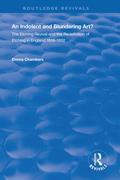
An Indolent and Blundering Art?
An Indolent and Blundering Art? - The Etching Revival and the Redefinition of Etching in England: ab 29.99 €- Shop: ebook.de
- Price: 29.99 EUR excl. shipping
-